From Pollution to Prevention : The Ovitrap Campaign
Preventing Disease through Plastic Recycling

Signed in as:
filler@godaddy.com
Preventing Disease through Plastic Recycling
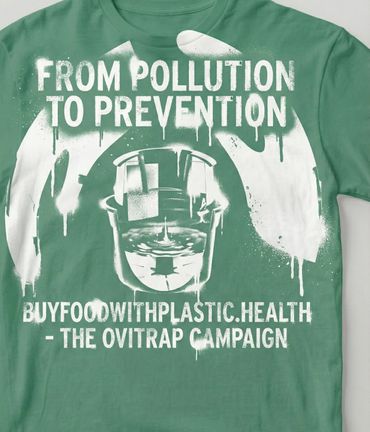
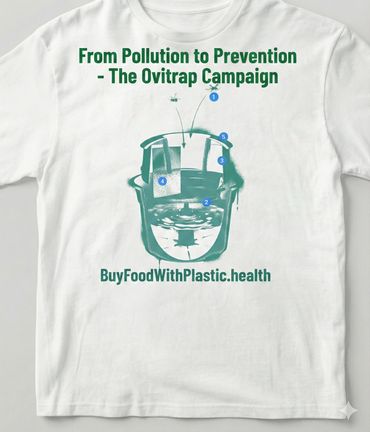
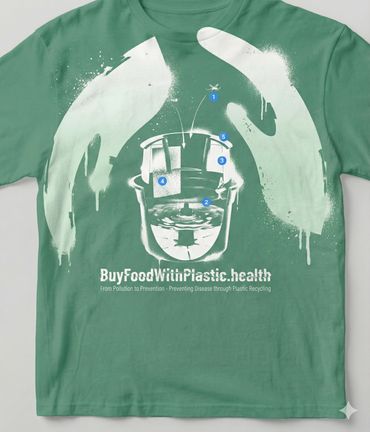
Plastic bottles and sachets in Ghana become dangerous breeding grounds for tiger mosquitoes, which transmit diseases such as dengue, Zika, and yellow fever.
We collect plastic directly from households, recycle it into high-quality mosquito traps called Ovitraps, and distribute them together with the community. Each trap is exchanged for 100 collected plastic bottles. The goal: fewer mosquitoes, fewer diseases, and more environmental protection.
With your donation, you fund the production of traps, community workshops, local jobs, and sustainable health education on site.
Even a small contribution helps prevent disease, strengthen recycling, and enable people to live healthier lives.
Help us turn plastic into a tool for health. Support us right where it is needed most!
For those who want to dive deeper:
This campaign comes here with a detailed background report, including all details, scientific evidence, and sources. This way, you can explore the project in more depth and clearly understand how your donation makes an impact.
Plastic pollution is widely known as an environmental problem. But hardly anyone realizes that plastic waste is also an ideal breeding ground for Aedes mosquitoes which are the carriers of dengue, Zika, chikungunya, and yellow fever. These day-biting mosquitoes lay their resilient eggs in small, human-made water containers such as plastic bottles, cups, or car tires. A single plastic cup can produce hundreds of new disease transmitters.
For comparison:
Many people know malaria mosquitoes (Anopheles), which usually breed in large, natural water bodies like puddles or swamps and bite mainly at night. Aedes mosquitoes, on the other hand, thrive in small plastic containers. Their eggs survive dry periods and hatch immediately after rainfall. This is a crucial advantage for their rapid spread.
“Since we started collecting plastic, there are fewer diseases” – how much truth is behind this?
This observation by a villager, Mrs. Bosomtwe from Ghana, was the starting point for our current campaign. What sounds simple at first can now be well explained with scientific findings: when plastic is systematically collected and removed from the environment, it means not only less waste, but also fewer mosquitoes, fewer bites, and fewer diseases.
Through our community events, plastic is now collected directly from households instead of being carelessly discarded. People have realized that every bottle and every sachet (500 ml plastic water sachet) has value - for the environment and for health. We want to build on this and prevent plastic from entering the environment in the first place.
Plastic waste threatens not only the environment but also human health. We go one step further: waste becomes a tool against mosquito-borne diseases. At the heart of our campaign is the Ovitrap which is a smart mosquito trap made from recycled plastic that specifically targets the dangerous Aedes mosquito.
With this campaign, we aim to create a new sector for Buy Food with Plastic: the health sector.
What is an Ovitrap?
The Ovitrap is a specially designed mosquito trap that mimics the perfect breeding site: water enriched with grass or leaves in the lower part attracts female mosquitoes. A fine mesh prevents them from laying their eggs in the water. When trying to escape, the mosquitoes orient themselves toward the bright, transparent part of the trap. There, they encounter a special adhesive surface, a so-called sticky card, before they can get out. In this way, each trap stops hundreds of potential disease carriers, without electricity, chemicals, or artificial lures.
The Ovitrap is designed to catch almost exclusively Aedes mosquitoes, while leaving most other insects unharmed. This makes it one of the most targeted and environmentally friendly methods of mosquito prevention.
Our Ovitraps are made almost entirely from recycled PET (rPET) collected from bottles. Nets, sticky cards, and other parts also come, wherever possible, from reused or natural materials. This way, health protection is effectively combined with sustainable upcycling.
The model is based on the proven BG-GAT principle but is further developed and optimized together with our partner, Dehgraf Studio, in Switzerland. Dehgraf Studio is a company specialized in 3D printing that creates the technical design, develops prototypes, and makes adjustments for us. This ensures that the traps are robust, efficient, and suitable for local production in Ghana.
How many collected plastic bottles are actually in a single Ovitrap?
A durable Ovitrap requires about 1.3 kilograms of rPET.
This equals around 60 small bottles (a 500 ml PET bottle weighs about 22-24 grams) or about 30-35 large bottles (a 1.5 L PET bottle weighs about 35-43 grams).
The material is thoroughly cleaned, prepared, and processed with the Filament Maker into high-quality 3D printing filament, which produces up to 79% less CO₂ than new plastic.
How does the cycle work?
Your support creates much more than just a product — it builds an entirely new health sector within Buy Food with Plastic:
The goal is to ensure long-term collection, education, and Ovitrap production.
What is already known?
Technical design & development cooperation (partner company Dehgraf Studio):
3D printers (Bambu Lab P1S, closed version) for Ovitrap production:
Filament Maker machine (Sustainable Design Studio):
(PET bottles are collected by the community and exchanged for a hot meal. This way, collection becomes an integral part of the social and ecological project.)
→ Total costs for technology & development: ≈ CHF 5,000
Basic tools & small equipment:
(since rooms, tables, and infrastructure are already provided by Buy Food with Plastic) ≈ CHF 500
Material costs for Ovitraps:
Paint, nets, sticky cards, small parts (recurring annually): ≈ CHF 1,500
Personnel costs (local employment):
Project coordination & support:
Transport, public relations, information material:
Contingency:
This will secure for one year:
At the same time, the investments in technology and the workshop are designed to be sustainable: they enable a lifespan of 3–5 years and the production of up to 3,000 Ovitraps. Since Buy Food with Plastic already manages all administration in a professional and efficient manner, we can guarantee that all funds will flow directly and purposefully into the project — ensuring long-term health and environmental protection.
Every contribution counts – and with these amounts we can make a concrete difference:
Your Contribution What it Achieves
– with a basis for 3–5 years (≈ 3,000 -Ovitraps)
How does your donation create impact?
For everyone who wants to dive deeper, we present the IOOI model (Inputs – Outputs – Outcomes – Impact) of our project. It transparently shows which resources are invested, which activities take place, and which short-, medium-, and long-term effects are achieved.
Join our team of passionate volunteers and make a difference in people's lives. We welcome volunteers of all ages and backgrounds.
Partner with Buy Food With Plastic for Health and show your commitment to social responsibility. We offer a range of sponsorship and partnership opportunities.
Stay up-to-date with our latest news and events by subscribing to our mailing list. We promise not to spam your inbox!


Our overall mission is to promote sustainable recycling practises that benefit both the environment and public health.
We love our friends and supporters, so feel free to visit anytime.
Buy Food with Plastic, Feldstrasse, Zürich, Switzerland
Mon | 09:00 – 17:00 | |
Tue | 09:00 – 17:00 | |
Wed | 09:00 – 17:00 | |
Thu | 09:00 – 17:00 | |
Fri | 09:00 – 17:00 | |
Sat | Closed | |
Sun | Closed |
Sign up for our newsletter!
Copyright © 2026 Buy Food With Plastic for Health - All Rights Reserved.